| The V1 Flying bomb, was the first cruise missile. An unmanned gyro-guided plane which delivered a ton of high explosive. 2419 exploded in London between June 1944 and March 1945. The distinctive noise of their pulse- jet engine which cut out after a predetermined mileage terrorised the population. They quickly became known as Doodlebugs. |
| V1 Flying Bomb |
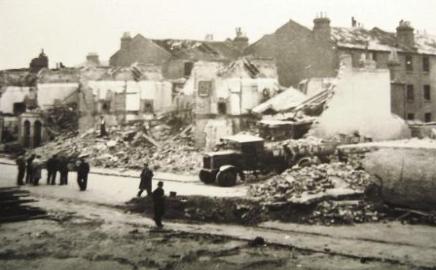
| The V1 was capable of killing large numbers of people, inflicting terrible injuries and causing huge material damage to buildings. It exploded on the surface, and a viscous blast-wave rippled out from the epicentre. Behind it, a vacuum, which caused a second rush of air as it filled. This caused a devastating pushing and pulling effect. The blast area extended across a radius of 400 - 600 yards . At the impact site, buildings were totally demolished. In inner- London suburbs, where terrace houses were packed together, up to 20 totally collapsed. Brick walls were pulverised into small fragments. Further out from the epicentre, walls, roofs and window frames were ripped out, exposing the contents and innards of the house. Further away again, all the windows were blown out and roofing slates blown off. Every time a V1 landed, hundreds of houses were damaged. 1944 was a cold, wet summer and repairs took many months. Londoners were de-housed or shivered in cold, damp and roofless houses. Anyone unlucky enough to be close to the impact site were blown apart or suffered crush injuries from falling masonry. Others were trapped below collapsed buildings and had to be dug out. Further away from the impact site, awful injuries were inflicted by shards of flying glass. During the course of the attacks the nature of the injuries changed. At the beginning people were caught unawares in the street and flying glass injuries were widespread. Later on, people understood the necessity of shelter in safe (er) areas of their home e.g. under the stairs. However, this had the effect of less flying glass injuries but more crush injuries from people being buried in the ruins of collapsed houses. The toll of human suffering was appx. 6184 people killed by V1's and 17981 seriously injured and maimed. Tens of thousands of others received lesser injuries. Countless more suffered the pain of bereavement or the loss of their home and treasured possessions. People left London through both official and unofficial evacuation schemes. By mid July 15,000 a day were leaving the terminal stations on packed trains. Some reports describe a situation at the main stations of near panic as people struggled to get tickets and onto the over-flowing trains. It is variously reported that between 1.5 and 2 million people fled the capital during this period. This created an eerie, empty feeling. Children disappeared from the streets and food stuff which had been in short supply became more readily available.. For the first time Eight deep- level air raid shelters, constructed too late for the blitz were opened, along the Northern line. Upto 8,000 people a night sheltered at each of the tunnels; Belsize Park, Camden Town, Stockwell, Clapham North, Clapham Common, Clapham South. |
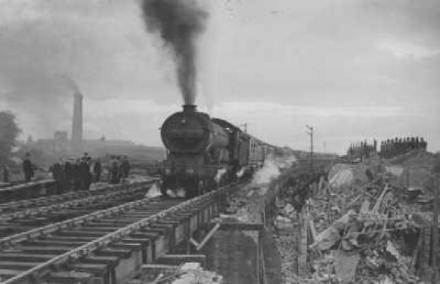
People in London had become used to the horrors of bombing during the 1940-41 Blitz. Since then, attacks were more sporadic .There were heavy hit and run raids in 1943 and In February 1944 the 'Little Blitz' caused further damage and death. After D-day, followed great relief and expectation the war would be over quickly. There had been rumours for some time, about Hitler's secret weapons, but civilians took these as a joke. On the night of the 13th June 1944, Londoners heard a strange sound in the sky. It was described as sounding like a motorbike without a silencer, or a badly maintained steam train going up hill. Some also thought they saw a burning enemy aircraft with a sword of flame emanating from its tail. Others, knew this was the first of the vengeance -weapons code named "Diver " by British Intelligence. For a year, bomber command had been engaged in a campaign to destroy the V1 launch sites in Northern France. This delayed the launch of the first missile by about 6 months, at the cost of the lives of 2000 allied airmen and an unknown number of French civilians in the countryside surrounding the sites. The first V1 dived to the ground and exploded in Grove Road London E4 at 04.25am 13th June 1944. It hit the bridge which carries the railway. The bridge and track were badly damaged, A number of houses were demolished and six people killed. London had its first taste of what a V1 could do. This was one of five launched that night which was a range finding exercise by the Nazis. After that nothing much happened for about 48 hours as they prepared the next wave of the attack |
The attack resumed on the 15th June, this time with a much increased launch rate. In the part of
South London I studied there were 2 on the 15th, 18 on the 16th, 17 on the 17th and 28 on the 18th
and many more outside these areas. Throughout the campaign, South and South East London took
the brunt.
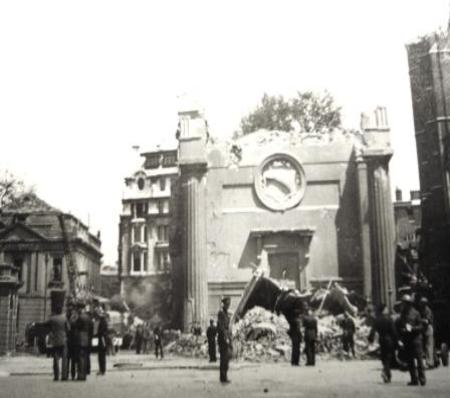
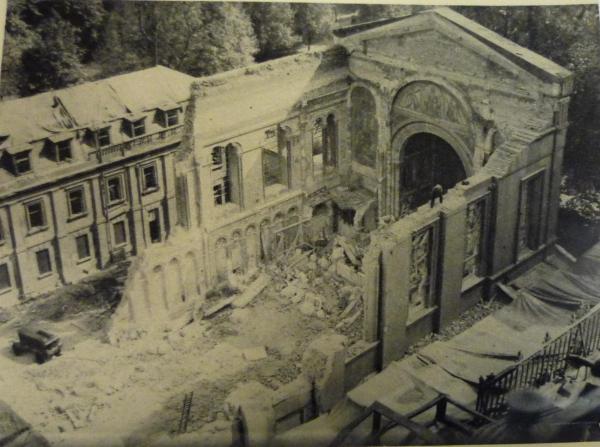
If the Luftwaffe could have chosen a target, none would have been better than the Guards Chapel.
It stood in Bird Cage Walk, St James and was the home of the Royal Guardsmen based at the
Wellington Barracks.
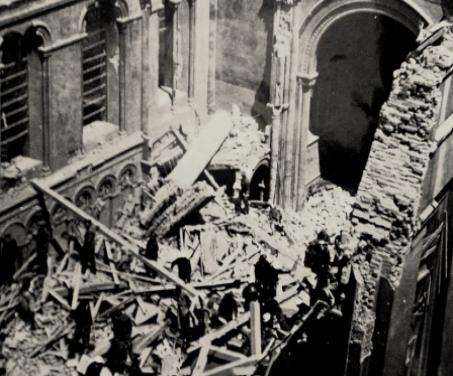
The church was packed that morning, with guardsmen, families and friends. Not long after the
service started, around 11am the congregation heard a distant buzzing. It gradually grew louder
and turned into a roar overhead which drowned out the hymn singing. The engine cut out, then the
V1 glided down and hit the concrete oof of the chapel. It had been rebuilt after damage by
incendiary bombs in the blitz. The V1 exploded on impact and the whole roof collapsed on the
congregation. Rubble was piled up to 10 foot deep.
121 military and civilians were killed and 141 seriously injured. Only the Bishop of Maidstone,
was totally unhurt. The portico over the altar from where he was conducting the service sheltered
him from the blast.
South London I studied there were 2 on the 15th, 18 on the 16th, 17 on the 17th and 28 on the 18th
and many more outside these areas. Throughout the campaign, South and South East London took
the brunt.
If the Luftwaffe could have chosen a target, none would have been better than the Guards Chapel.
It stood in Bird Cage Walk, St James and was the home of the Royal Guardsmen based at the
Wellington Barracks.
The church was packed that morning, with guardsmen, families and friends. Not long after the
service started, around 11am the congregation heard a distant buzzing. It gradually grew louder
and turned into a roar overhead which drowned out the hymn singing. The engine cut out, then the
V1 glided down and hit the concrete oof of the chapel. It had been rebuilt after damage by
incendiary bombs in the blitz. The V1 exploded on impact and the whole roof collapsed on the
congregation. Rubble was piled up to 10 foot deep.
121 military and civilians were killed and 141 seriously injured. Only the Bishop of Maidstone,
was totally unhurt. The portico over the altar from where he was conducting the service sheltered
him from the blast.
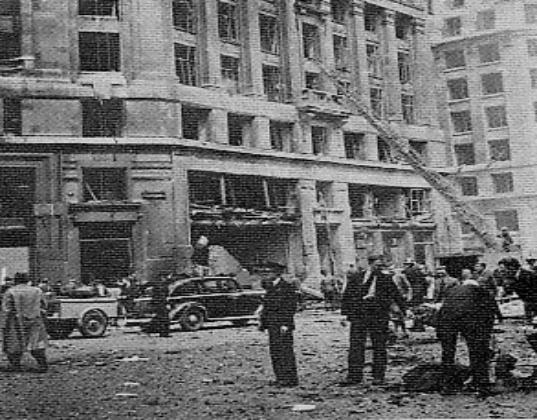
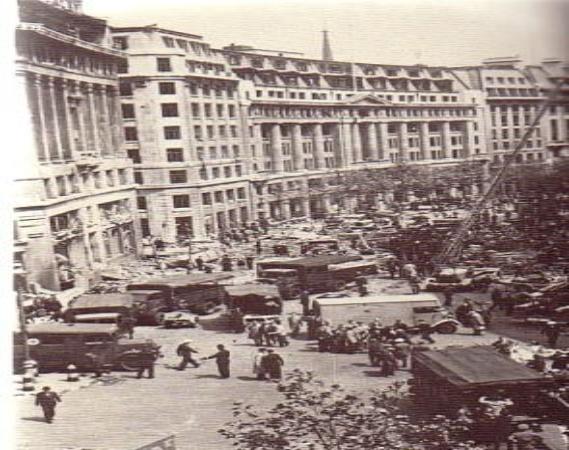
| The Aldwych was packed with people on their lunch hours when the V1 struck. Others were at their desks and some of the girls from the Air ministry were sunbathing on the roof. The modern steel-frame buildings stood up well to the blast and indeed much of it was absorbed by the blast wall outside the Air Ministry. This caused the blast to be channelled down the street rather than dissipating in collapsing buildings. Numerous people were mown down killed or maimed, more died in the ruins of buses and the girls on the Air ministry roof also perished. Some workers at the Air Ministry were sucked out of office windows by the blast and vacuum and died . 48 people were killed and many more injured. |
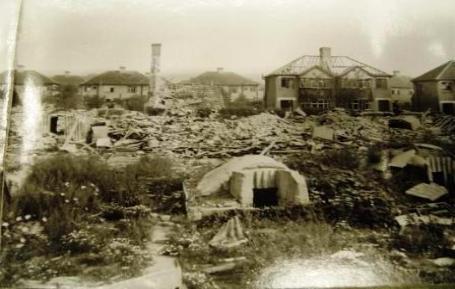
| Gypsy Road Welling which received 2 V1 hits |
| Clockhouse Beckenham 2nd August 1944 |
| This disaster happened on 2nd August 1944 at 13.02 when a Flying bomb hit a restaurant crowded with people lunching. It stood in the Clockhouse area of Beckenham, just South of the railway bridge that carries the Beckenham to Crystal Palace line The restaurant was on the west side of the road. 44 people were killed, many instantly and many badly injured. As well as the restaurant huge destruction was caused to the shops and houses which lines the road at this point. This was one of the worst V1 incidents in South London and for the borough of Beckenham the worst single civilian incident of the war. The blast extended many hundreds of yards in each direction. By this stage of the attacks the Nazis were packing the V1's with more powerful explosives. Whilst researching I found one particular tragedy relating to this incident that really brought home the horror. One of the fatal casualties was Herbert Steer, aged 56. As this was not bad enough his 17 year old son Sydney had been killed, along with 16 others when a V1 hit Elmers End bus garage on the 18th July. The Clockhouse V1 demolished 14 shops and 12 houses in the Beckenham Road and caused major damage to a further 17 shops and 42 houses. Another 18 shops and 124 houses were damaged to one degree or another in Beckenham Road, Churchfield Road, Thayers Farm Road, Chaffinch Road and Sydney Road. There was a fire in the debris in Beckenham Road. Viewing the area today, the major extent of the damage is clear. The road has been widened and new flats stand near the original impact point. On the east-side of the road ,property has been re-built. In the adjoining roads clear signs can be seen where formally terraced houses now have become semi detached and display a bare end wall. |
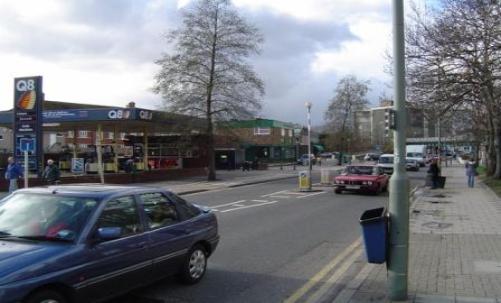
| This picture is of the site in 2004 and shows the extensive re-development on both sides of the road. The restaurant stood about half way up on the left. The 60's block in the far left background is on the site of the Mckenzie Road bomb which hit on th 30th June. Since this picture was taken further re-development has taken place |
| Grove Road London E4 13th June 1944 |
| The V1 exploded on the roof of a shelter outside Marks and Spencer. Major damage was caused to the shops which also include Woolworth's and Sainsburies and also to the market. 59 people died in this tragedy and a further 124 were very seriously injured. Hundreds of others suffered less serious injury. Casualties occurred in the shops, in the basement café of Woolworth's and on passing buses. The Post Office was also badly damaged. This was the worst single V1 incident in South London. The blast area was particularly large and extended Up to 600 yards in each direction. This is indicative of the larger and more powerful warheads used by the Nazis later in the attacks. In total about 100 shops were very badly damaged and flats, shops and houses suffered varying degrees of damage across a wide area. The High Street in this point was completely re-built after the war on both side of the road. |
| ||||||||||||||||||||||||||||||||||||||||||||||||||||||||||||||||||||||||||||||||||||||||||||||||||||||||||||||||||||||||||||||||||
| Sloane Court Chelsea 3rd July 1944 |
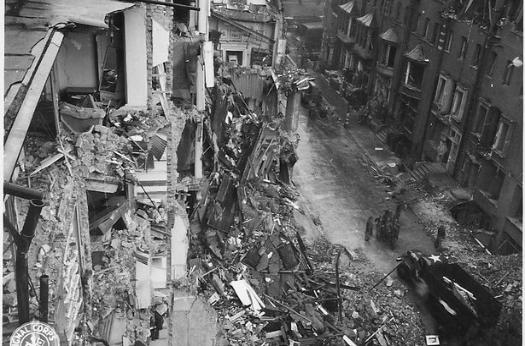
In terms of fatalities this was the second worst Flying
Bomb incident of the campaign This was another case of
a perfect target ( even though it was probably the random
act of fate) as the block of flats was filled with American
G.I's , The V1 struck at 07.41 am in the morning and in
the resulting explosion and fire around 74 service men
were killed
Bomb incident of the campaign This was another case of
a perfect target ( even though it was probably the random
act of fate) as the block of flats was filled with American
G.I's , The V1 struck at 07.41 am in the morning and in
the resulting explosion and fire around 74 service men
were killed
 |
 |
 |
 |
 |
 |
 |
 |
| Worst V1 Flying bomb incidents in the part of South London studied |
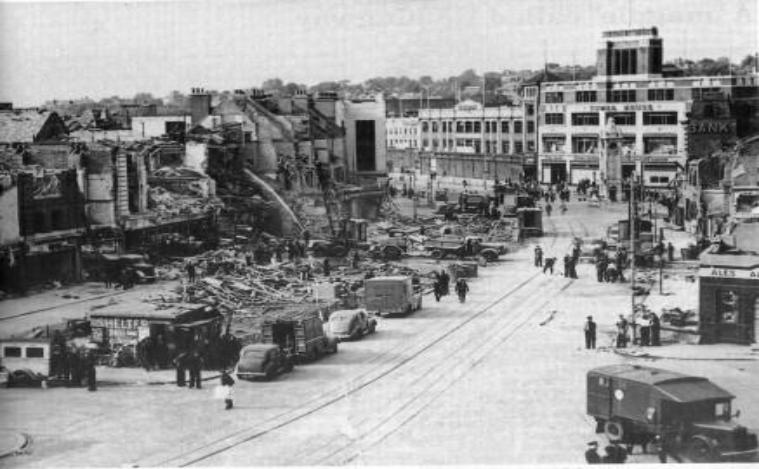
Lewisham High Street 28th July 1944
Clockhouse Beckenham 2nd August 1944